

Picture this: you are a founder with a solid product, a clear market, and a growing customer base. You have pitched to a dozen investors. Some liked the idea. Few wrote a cheque. Then you discover a route that does not depend on one gatekeeper, one meeting, or one term sheet. That route is crowdfunding, and in 2026 it has become one of the most practical ways to launch and scale a business in Dubai.
The city has always moved fast. But the speed at which crowdfunding has integrated into the local startup ecosystem is something else. Government initiatives, platform innovation, and a community of investors who want in on early-stage deals have all converged. The result is a funding environment that looks very different from just a couple of years ago. For anyone trying to raise capital in the UAE right now, understanding this shift is not optional. It is essential.
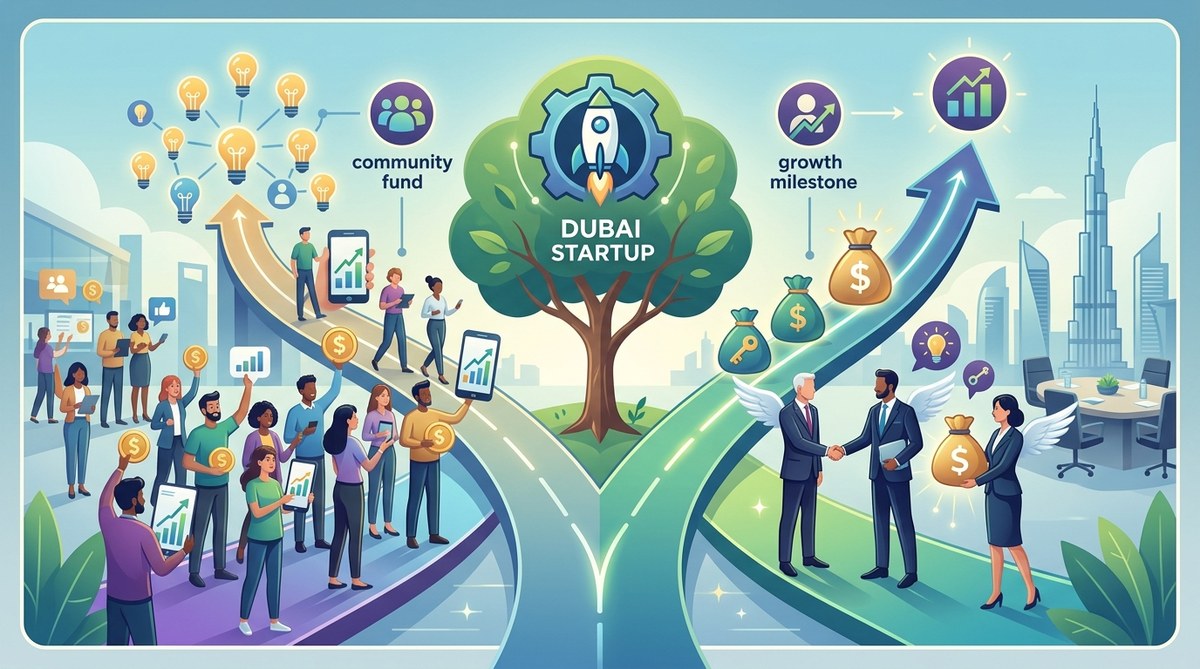
Dubai startup crowdfunding in 2026 is no longer a last resort. It is a first-choice funding channel for many founders, supported by new regulations, specialised platforms, and a growing base of retail and institutional investors. Success depends on choosing the right model, preparing a strong narrative, and engaging your backers before, during, and after the campaign.
The shift in how Dubai startups raise money
Five years ago, the funding conversation in Dubai revolved around venture capital, angel networks, and government grants. Those channels still exist and matter. But crowdfunding has stepped into the spotlight as a credible, regulated, and scalable alternative.
The Dubai Financial Services Authority (DFSA) and the Securities and Commodities Authority (SCA) have both introduced clear frameworks for crowdfunding platforms. That regulatory clarity gave confidence to operators and investors alike. In 2026, platforms like Beehive, Eureeca, and new entrants are processing more deals than ever. The total capital raised through crowdfunding in the UAE is projected to cross the half-billion dirham mark this year.
What changed? Trust. When investors know the rules are clear and the platform is monitored, they feel safer putting money into early-stage companies. And founders realised that crowdfunding offers more than just capital. It brings a built-in marketing engine, a community of advocates, and validation that can open doors to larger institutional rounds later.
Why crowdfunding fits Dubai’s DNA
Dubai is a city of networks. People here know people. A campaign that goes viral in a WhatsApp group or gets shared at a Majlis can reach hundreds of potential backers overnight. Crowdfunding plays directly into that social, relationship-driven culture.
Another factor is the sheer diversity of the population. Dubai is home to over 200 nationalities. That means a startup targeting a niche market at home can also find support from diaspora communities who understand the problem. A healthtech platform focused on diabetes management, for example, found its first backers among South Asian professionals in Dubai who had family members living with the condition. That kind of targeted community support is hard to replicate with traditional fundraising.
The cost of living and doing business in Dubai also means that many residents have disposable income and an appetite for alternative investments. Real estate and stocks have been the default. But crowdfunding offers a way into the startup world with relatively small ticket sizes, sometimes as low as 500 dirhams.
How crowdfunding is changing the game for founders
Let me walk you through the practical ways crowdfunding has shifted the playing field for Dubai startups in 2026.
-
Faster access to capital. A typical venture capital round takes three to six months from first meeting to money in the bank. Crowdfunding campaigns can close in 30 to 60 days. For a startup with a seasonal product or a time-sensitive opportunity, that speed is a game changer.
-
Validation that attracts follow-on funding. When a campaign hits its target, it sends a signal to the market. Investors see that real people put real money behind the idea. Several Dubai startups that raised initial capital through crowdfunding went on to close larger VC rounds within 12 months.
-
Marketing and community building rolled into one. A crowdfunding campaign forces founders to articulate their story clearly. That same narrative becomes the foundation for their brand. Backers who invest early often become the most vocal promoters, sharing the campaign with their own networks.
-
Access to a wider investor base. Instead of pitching to a handful of funds, founders can present their opportunity to thousands of potential backers. That includes Emirati investors, expat professionals, and even international supporters who want a piece of the Dubai story.
-
Lower barrier to entry for first-time founders. Without a track record or warm introductions, getting a meeting with a VC is tough. Crowdfunding platforms evaluate your idea, your traction, and your team. If the platform approves your campaign, you get a shot. That democratisation is pulling in founders who would have been overlooked a few years ago.
Types of crowdfunding gaining ground in Dubai
Not all crowdfunding is the same. The models that work best in Dubai depend on the stage of the business and the type of backers you want to attract.
-
Equity crowdfunding. Investors receive shares in the company. This is the dominant model for growth-stage startups in Dubai. Platforms like Eureeca specialise in equity deals, and many campaigns close at over a million dirhams.
-
Debt-based crowdfunding (peer-to-peer lending). Founders borrow money and repay it with interest. Beehive pioneered this model in the UAE, and it remains popular for businesses with steady revenue that need working capital rather than a equity investment.
-
Reward-based crowdfunding. Backers receive a product or service in return for their pledge. This model is common for consumer goods, tech gadgets, and creative projects. It works well for market testing and pre-sales.
-
Donation-based crowdfunding. Used mainly by social enterprises and charitable initiatives. While less common for for profit startups, it has funded several impact-driven projects in the UAE.
Each model has its own regulatory requirements, fee structures, and investor expectations. Choosing the right one is the first big decision a founder makes when they decide to crowdfund.
Common mistakes founders make and how to avoid them
Crowdfunding looks simple from the outside. You set up a page, tell your story, and watch the money roll in. The reality is more complex. I have seen campaigns that stalled, struggled, or failed because founders overlooked a few key things.
| Mistake | Why it hurts | What to do instead |
|---|---|---|
| Launching without an existing audience | No one sees your campaign. The algorithm does not boost you. | Build an email list and social following for at least 90 days before launch. |
| Setting an unrealistic funding target | A target that is too high makes the campaign look unachievable. Too low and you leave money on the table. | Research similar campaigns on the same platform. Set a target that matches your minimum viable ask. |
| Ignoring post-campaign communication | Backers feel forgotten. Negative reviews appear. Future campaigns suffer. | Send regular updates. Share milestones. Treat backers as long-term partners, not one-time donors. |
| Weak video and visuals | Investors judge quickly. A poor presentation kills trust. | Invest in a professional pitch video and clear graphics that show the product working. |
| Forgetting local cultural context | A generic global pitch does not resonate in Dubai. | Reference local problems, local team members, and how your solution fits the UAE market. |
Avoiding these mistakes does not guarantee success. But it dramatically improves your odds. Founders who treat their campaign like a product launch, not a plea for funds, tend to outperform those who wing it.
What makes a campaign stand out in 2026
The best campaigns I have seen this year share a few common traits. They tell a story that feels personal and urgent. They show traction, not just potential. And they make it easy for backers to understand what they get in return.
“The campaigns that succeed in Dubai are the ones that treat their backers like co-founders, not like ATMs. When you give people a real stake in your journey, they become your best salespeople.”
Fatima Al Mansouri, founder of a Dubai based fintech that raised 2.2 million dirhams via equity crowdfunding in early 2026.
That quote captures the mindset shift that matters most. Crowdfunding is not about asking for a handout. It is about inviting people to join your mission. When backers feel that sense of ownership, they share your campaign, defend your brand, and stick with you through the hard months.
Another factor that separates strong campaigns from weak ones is transparency. Backers want to know where their money goes. A clear breakdown of how the funds will be used, from product development to marketing to salaries, builds credibility. So does a honest assessment of risk. No business is risk free, and pretending otherwise makes you look naive.
For more practical advice on running a campaign that connects with backers, check out these top strategies for successful crowdfunding campaigns in Dubai. It covers everything from pitch structure to reward tiers.
The role of government initiatives and ecosystem support
Dubai’s government has been intentional about building a startup friendly environment. The Dubai Future Foundation, the Dubai International Financial Centre (DIFC), and the Abu Dhabi Global Market (ADGM) have all launched initiatives that support alternative funding models.
In 2025, the UAE government introduced a co-investment scheme that matches funds raised through approved crowdfunding platforms. That means if you raise 500,000 dirhams from the crowd, the government adds another 250,000. The scheme expanded in 2026 to cover more sectors, including clean energy, healthtech, and education technology.
Free zones have also started to offer incentives for startups that use crowdfunding. Reduced licensing fees, fast-track visa processing, and access to co-working spaces are among the perks. For a founder setting up a new company, those benefits can reduce the burn rate significantly in the first year.
Platforms themselves have stepped up. Eureeca now offers a pre-campaign advisory service that helps founders refine their pitch. Beehive provides post-funding support to help businesses manage their debt repayments. The ecosystem is maturing, and that maturity benefits everyone who participates.
If you are still exploring whether crowdfunding is the right path for your business, read more about unlocking funding opportunities for UAE entrepreneurs through crowdfunding. It breaks down the eligibility criteria and the documentation you need to prepare.
What to watch for in the second half of 2026
The pace of change is not slowing down. Here are a few trends I am tracking for the remainder of the year.
First, secondary markets for crowdfunded shares are emerging. If early backers want to sell their stake before an exit, a secondary market makes that possible. That liquidity will attract more retail investors who previously stayed away because they did not want to lock up money for years.
Second, artificial intelligence is being used to match investors with opportunities. Platforms are building recommendation engines that analyse a backer’s past investments and suggest new campaigns that fit their profile. That means better targeting and higher conversion rates for founders.
Third, sector specific crowdfunding platforms are appearing. Instead of one platform for all types of businesses, we are seeing platforms focused on climate tech, food and beverage, and creative industries. These niche platforms attract investors who are specifically interested in those sectors, which means warmer leads and more relevant feedback.
For a broader view of what is changing across the Dubai business environment, take a look at the top trends shaping Dubai’s business landscape in 2026. Crowdfunding is just one piece of a much larger puzzle.
Building your crowdfunding strategy for 2026 and beyond
If you are a founder reading this and thinking about launching a campaign, the best time to start preparing is now. Crowdfunding rewards preparation. The founders who succeed are the ones who spend months building their audience, refining their story, and understanding what their backers actually want.
Start by choosing the right model for your stage and sector. If you have revenue and need growth capital, debt crowdfunding might be your best bet. If you are earlier stage and want to give away equity, go with an equity platform. If you are launching a physical product, reward based crowdfunding lets you test demand before you manufacture.
Build your network before you need it. That means growing a mailing list, engaging on LinkedIn and Instagram, and connecting with the Dubai startup community through events and meetups. When you launch your campaign, you want a group of people who already trust you and are ready to back you on day one.
Tell a story that matters. Do not just list features. Explain the problem you are solving and why it matters to people in the UAE. Use local examples. Name the neighborhoods, the communities, the daily frustrations that your product addresses. That local flavour makes your campaign stand out from the generic pitches that flood the internet.
Finally, treat your backers like partners. Keep them updated. Celebrate milestones together. Ask for their input. When you eventually build a successful company, those early backers will be your strongest advocates.
Dubai startup crowdfunding in 2026 is not a trend. It is a permanent shift in how capital flows to innovative ideas. The founders who understand that shift and act on it will be the ones building the next generation of Dubai based success stories.
If you want to go deeper into the mechanics of running a campaign, check out this guide on how to build a compelling crowdfunding campaign for Dubai’s dynamic startup scene. It walks through each phase from pre-launch to post-campaign follow through.
The money is out there. The platforms are ready. The investors are waiting. The only question is whether you are prepared to tell your story and invite them in.










Leave a Reply