

Finding money for your startup in Dubai can feel like a puzzle. You might have a brilliant idea, a solid plan, and a growing market. Yet traditional bank loans often come with interest, which does not fit Sharia principles. Venture capital can be competitive and might demand too much control early on. So where do you turn?
Islamic crowdfunding for startups offers a clear path forward. It is a funding method that respects your values while giving you access to a community of backers who believe in your vision. In 2026, this model is gaining serious traction across the UAE. It combines the power of the crowd with the discipline of Islamic finance. No interest. No unethical investments. Just real support for real businesses.
Islamic crowdfunding for startups in Dubai works because it aligns profit with purpose. You raise capital from a community that shares your ethical standards. The funds are structured as profit-sharing (Mudarabah) or asset-backed partnerships (Musharakah), not interest-bearing loans. In 2026, platforms like HalalFi and Ethis are making this model accessible to early-stage founders across the UAE.
Why Islamic Crowdfunding Works for Dubai Startups
Dubai has always been a hub for innovation. The Dubai Economic Agenda D33 aims to double the size of the economy over the next decade. Startups are a big part of that plan. But many founders hit a wall when they look for early-stage capital. You might not have the collateral for a conventional loan. Or you might be uncomfortable with the riba (interest) that comes with standard financing.
Islamic crowdfunding solves both problems. It is built on risk-sharing. Investors and entrepreneurs share both the profits and the losses. This creates a partnership mentality rather than a lender-borrower relationship. For a founder, that means less pressure on fixed repayments and more focus on building a sustainable business.
The UAE has also made regulatory strides. The Securities and Commodities Authority (SCA) has frameworks that govern crowdfunding platforms. This gives both founders and backers confidence. You are not operating in a grey area. You are using a recognised, regulated funding channel.
How Islamic Crowdfunding Models Work
There are a few core models you will encounter. Each one fits a different type of business or funding need.
Mudarabah (Profit-Sharing)
In a Mudarabah model, you act as the entrepreneur (mudarib) and the investors act as the capital providers (rabb-ul-mal). You manage the business. They provide the funds. Profits are shared according to a pre-agreed ratio. Losses are borne by the investors unless you are negligent.
This works well for startups that need working capital or have a clear revenue model. You keep control of operations. The investors trust your expertise.
Musharakah (Equity Partnership)
Musharakah is closer to a joint venture. Everyone contributes capital and shares in the management. Profits and losses are split according to each partner’s share. This model is common for larger projects or when you need co-founders who also bring funds.
For example, a tech startup in DIFC might use Musharakah to bring in a strategic partner who provides both cash and industry connections.
Murabaha (Cost-Plus Financing)
This is not strictly a crowdfunding model, but some platforms use it for asset-based campaigns. The platform buys an asset you need (like equipment or inventory) and sells it to you at a markup. You pay in installments. The markup is a fixed profit, not interest.
This model is useful if your startup needs physical assets to operate. A food delivery startup in Dubai could use Murabaha to finance a fleet of electric scooters.
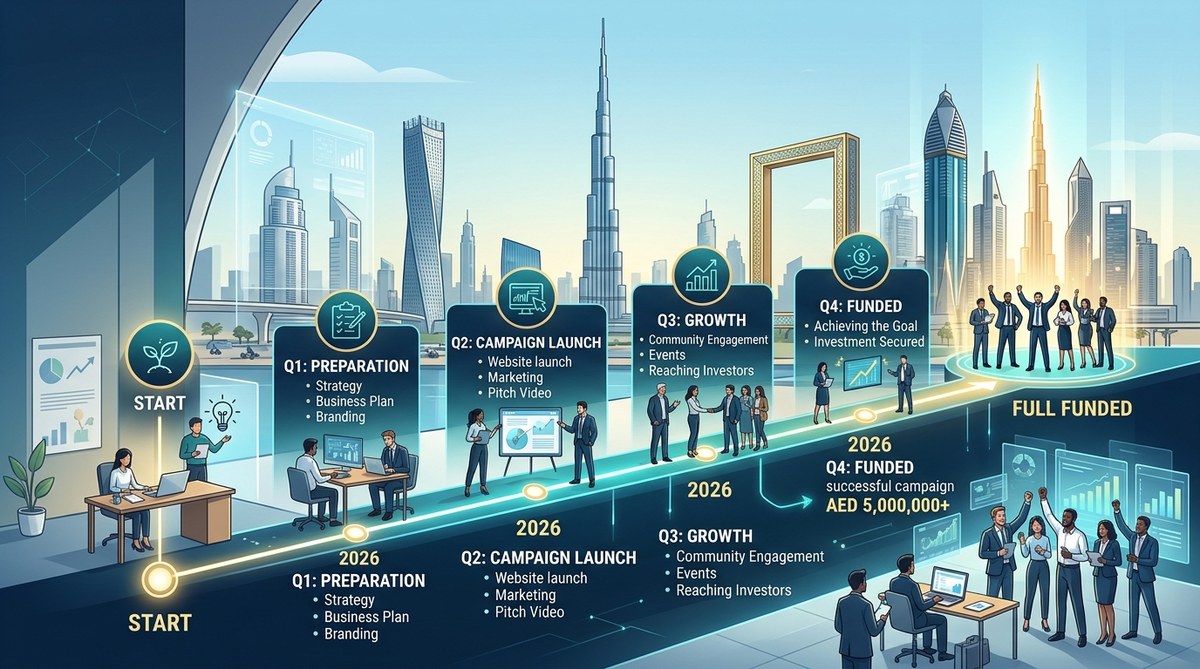
A Step-by-Step Process to Launch Your Campaign
Let us walk through the practical steps. This is not theory. This is what you will do in 2026 to raise funds.
-
Choose your model and platform. Decide whether Mudarabah or Musharakah fits your business. Then pick a platform that specialises in that model. Research their track record, fees, and the type of campaigns they support. Look at platforms like Ethis, HalalFi, or LaunchGood.
-
Prepare your business plan with Sharia compliance. Your plan must show that your business activity is halal. No gambling, alcohol, tobacco, or speculative trading. You also need to explain how profits will be calculated and distributed. A Sharia advisory board may review your plan on some platforms.
-
Set a realistic funding goal and timeline. Calculate how much capital you actually need to reach your next milestone. Do not ask for more than you can deploy effectively. Most campaigns run for 30 to 60 days. Set a timeline that gives you enough room to build momentum.
-
Create your campaign pitch. This includes a video, a written description, and financial projections. Be transparent about risks. Islamic investors appreciate honesty because they are sharing the risk with you. Show your team’s background and why you are the right person to execute the plan.
-
Promote your campaign to the right communities. Your network is your first line of support. Reach out to family, friends, and professional contacts. Then expand to Islamic finance groups, startup communities in Dubai, and social media channels focused on ethical investing.
-
Fulfill your promises and report back. After the campaign ends, keep your backers updated. Share progress, challenges, and financial results. This builds trust for future rounds and strengthens your reputation in the ecosystem.
Common Mistakes to Avoid
I have seen founders make the same errors again and again. Here is a table that shows what to avoid and what to do instead.
| Mistake | Why It Hurts | Better Approach |
|---|---|---|
| Vague profit-sharing terms | Backers lose trust | Define clear ratios and triggers for profit distribution |
| Ignoring Sharia compliance details | Platform may reject your campaign | Work with a Sharia consultant early in your planning |
| Overpromising returns | Damages credibility if you miss targets | Use conservative projections and explain your assumptions |
| Launching without a community | No one sees your campaign | Build an email list or social following before you launch |
| Poor communication after funding | Backers feel ignored and may not reinvest | Send monthly updates with real numbers and stories |
Expert Advice from the Dubai Ecosystem
“The most successful Islamic crowdfunding campaigns I have seen in Dubai are the ones where the founder treats every backer as a true partner. They share the wins and the losses openly. That transparency builds a loyal community that will support them through multiple funding rounds.”
Fatima Al Hashimi, Islamic Finance Advisor based in DIFC
Fatima’s point is important. Islamic crowdfunding is not just a transaction. It is a relationship. When you respect that relationship, your backers become your best marketers. They tell their friends, share your campaign, and become repeat investors.
Practical Tips for Your Campaign in 2026
Here are some actionable tips that will help you stand out.
- Use video to tell your story. A two-minute video that shows your product, your team, and your passion can double your conversion rate.
- Highlight your Sharia compliance badge. If your platform has a Sharia board, mention it. It signals credibility.
- Offer rewards that make sense. Even in profit-sharing models, you can offer early access to your product or exclusive updates.
- Engage with the UAE startup community. Attend events at Area 2071, Dubai Internet City, or the Sharjah Entrepreneurship Festival. Meet potential backers face to face.
- Use social proof. If you have already secured a lead investor or a strategic partner, mention it. It encourages others to follow.
A Comparison of Popular Islamic Crowdfunding Platforms
| Platform | Best For | Model Type | Fee Structure |
|---|---|---|---|
| Ethis | Real estate and SME projects | Mudarabah, Musharakah | 2% to 5% of funds raised |
| HalalFi | Early-stage startups and social enterprises | Mudarabah | 3% platform fee plus payment processing |
| LaunchGood | Creative projects and community causes | Donation and rewards-based | 5% platform fee |
| Shekra | Equity crowdfunding for startups in the MENA region | Musharakah | Varies by deal structure |
Each platform has its own application process. Some require a minimum track record. Others are more open to pre-revenue startups. Do your homework before applying.
What the Future Holds for Islamic Crowdfunding in Dubai
The market is growing. More investors are looking for ethical ways to deploy their capital. The UAE government is actively supporting fintech and Islamic finance. In 2026, we are seeing more integration between digital wallets, blockchain, and crowdfunding platforms. This makes it easier for backers to contribute from anywhere in the world.
For founders, this means a larger pool of potential investors. You are not limited to the UAE. You can attract capital from Malaysia, Indonesia, the UK, and beyond. The key is to run a campaign that is professional, transparent, and compliant.
If you want to go deeper, check out our guide on top strategies for successful crowdfunding campaigns in Dubai. It covers the nuts and bolts of campaign execution.
Your Next Steps as a Dubai Founder
You do not need to wait for the perfect moment. Start preparing now. Talk to a Sharia advisor. Research platforms. Write your business plan with profit-sharing in mind. Build your community on LinkedIn and at local events.
The path is clear. Islamic crowdfunding for startups is not a niche option anymore. It is a mainstream funding method that aligns with your values and your business goals. In 2026, Dubai is the perfect place to launch a campaign like this. The ecosystem is supportive. The regulations are clear. The investors are ready.
Go ahead and take the first step today. Your future backers are waiting to meet you.










Leave a Reply