

A campaign goes live on a Dubai crowdfunding platform. Within hours, donations start flowing in. Why? What made that first person click “pledge”? And why did the next fifty follow?
The answer is not random luck. It is a predictable mix of trust, identity, and emotional triggers. Understanding the psychology of backer behavior crowdfunding is the difference between a campaign that stalls and one that hits its target before the deadline. For platform managers, researchers, and founders in the UAE, these insights are gold.
Backers are not just wallets. They are driven by social proof, a sense of belonging, and the joy of being part of something bigger. In Dubai’s close knit community, reputation and reciprocity matter more than any sales pitch. To succeed, you must build trust first and ask for money second.
The Core Motivations That Drive Donations
Researchers have spent years studying why people give. The findings consistently point to three main drivers.
Intrinsic motivation. This is the internal reward. A backer feels good when they help. They get a warm glow from supporting a cause or a founder they believe in. In Dubai, where community ties are strong, this feeling is amplified during Ramadan or national initiatives like the Year of Community.
Extrinsic motivation. This includes external benefits. A backer might want public recognition, a reward, or a reciprocal favor later. On platforms like Dubaire or Eureeca, backers often expect updates, shoutouts, or even equity.
Social motivation. This is the biggest driver in 2026. People give because others are giving. They want to be part of a visible movement. They want to tell their friends, “I backed that startup before it was famous.”
A 2023 study on Frontiers in Organizational Psychology confirmed that social interaction based motives often outweigh pure altruism in online crowdfunding. Backers want to feel connected to the creator and to other backers.
How Trust Works in a Digital Donation
Trust is the currency of crowdfunding. Without it, no amount of storytelling will convert a visitor into a backer.
In the UAE, trust has a local flavor. Backers look for signals like a valid UAE trade license, a physical address in Dubai, or endorsements from known figures in the ecosystem. A campaign that lists a P.O. Box in Al Quoz and nothing else will struggle.
The psychology here is simple. Humans are wired to avoid loss. When a backer donates, they risk losing their money if the campaign fails. To overcome this, you must reduce perceived risk.
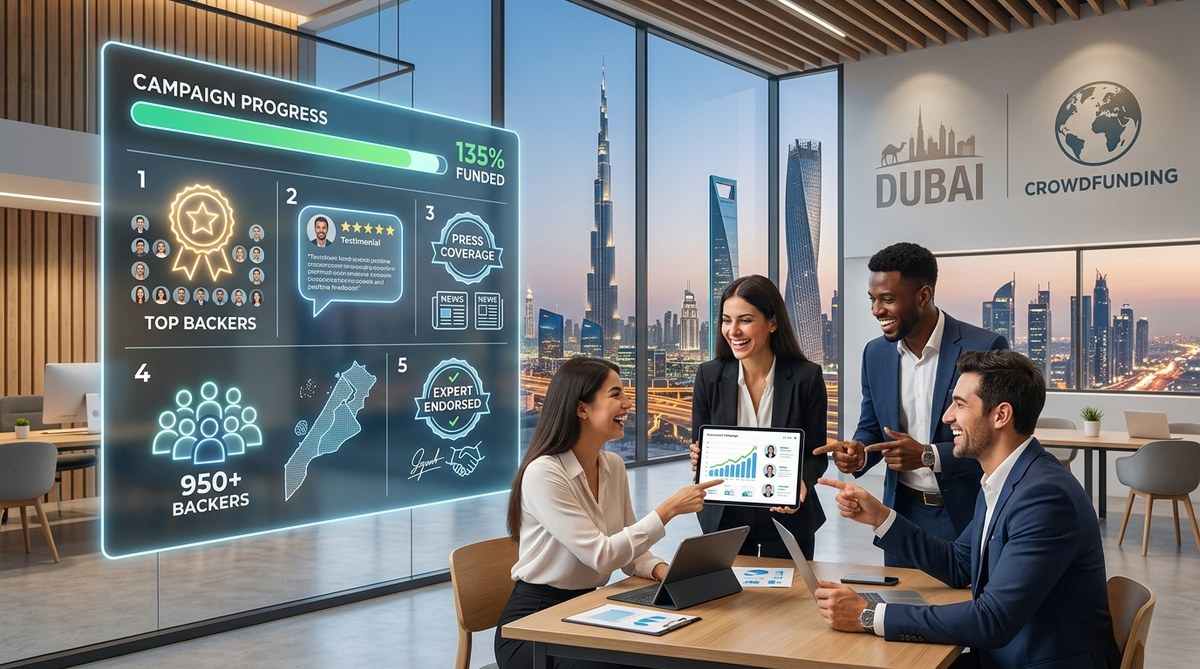
Here are the trust signals that matter most in Dubai:
- Verification badges. Platform verified campaigns see higher conversion rates.
- Social proof. Visible backer counts and comments from real people.
- Transparency. Clear budgets, timelines, and team bios.
- Local endorsements. A mention from a Dubai based incubator or a government entity like Dubai SME.
For a deeper look at building this trust from the ground up, check out our guide on how to build a compelling crowdfunding campaign for Dubai’s dynamic startup scene.
The Role of Identity and Belonging
Backers do not just fund projects. They fund identities.
When someone backs a campaign, they are saying, “This is who I am.” They support a green tech startup because they see themselves as environmentally conscious. They fund a local food brand because they are proud of Emirati cuisine.
This is called self signaling. The donation becomes a symbol of the backer’s values.
In Dubai, this is especially powerful. The city is built on ambition and innovation. Backing a local startup feels like supporting the future of the UAE. It is a way to say, “I am part of this growth story.”
Platform managers can tap into this by highlighting the backer’s role. Instead of saying “Donate now,” they can say “Join the movement” or “Be part of Dubai’s next success story.”
Practical Steps to Activate These Drivers
You can apply these psychological principles today. Here is a numbered process to design a campaign that appeals to intrinsic, extrinsic, and social motivations.
-
Map your backer personas. Identify who will back you. Are they young professionals in Dubai Marina? Expat families in Arabian Ranches? Local investors in Abu Dhabi? Each group has different triggers.
-
Build trust before launch. Get your verification badge. Recruit 10 to 20 early backers from your network. Ask them to pledge on day one so the counter shows momentum.
-
Design rewards that signal status. Offer a limited “founding backer” tier. Include a digital badge they can share on LinkedIn or WhatsApp. In Dubai’s networking culture, this is a strong extrinsic motivator.
-
Show the social wave. Use a progress bar that updates in real time. Post updates every 48 hours. When people see that 40% of the goal is already met, they are more likely to join.
-
Thank backers publicly and personally. A video shoutout from the founder, a handwritten note, or a mention in a newsletter. This feeds the joy of giving and encourages repeat behavior.
For more tactical advice on the pre launch phase, read our 5 essential steps to a winning crowdfunding campaign in the UAE.
Common Psychological Mistakes That Kill Campaigns
Even well funded campaigns make these errors. Avoid them.
| Mistake | Why It Hurts | Better Approach |
|---|---|---|
| Asking for money too early | Triggers loss aversion. Backers feel pressured. | Lead with story and mission first. |
| Hiding the team | Lowers trust. Backers want to see real faces. | Add photos and bios of every team member. |
| Ignoring comments | Breaks the social loop. Backers feel ignored. | Reply within 24 hours. Show you are active. |
| Setting a vague goal | Creates uncertainty. Backers do not know what is needed. | Break down the budget. Show exactly where funds go. |
| Forgetting local context | Misses the cultural connection. | Reference Dubai landmarks, local holidays, or UAE values. |
One of the biggest mistakes Dubai startups make is copying a US style campaign without adapting it. A campaign that works in San Francisco may fall flat in Dubai because it lacks the local trust signals.
Learn from others who have stumbled. Our article on 7 crowdfunding mistakes Dubai startups must avoid in 2026 covers these in more detail.
Understanding the Donor Journey
The decision to back a campaign is not a single moment. It is a journey.
A potential backer first hears about your campaign. They might see a post on a friend’s Instagram story or a mention in a Dubai business group on Telegram. Then they visit the page. They scan the video. They look at the backer count. They check the comments. They leave.
Then they come back. Maybe they see that the campaign has gained 10 more backers. Now the social proof is stronger. They scroll again. They read the budget. They see a comment from someone they trust. They pledge.
This journey can take hours or days. The key is to make every touchpoint consistent. The story, the visuals, and the trust signals must all say the same thing.
“Backers are not making a rational financial decision. They are making an emotional decision and then justifying it with logic. Your job is to make that justification easy.” – Dr. Nora Al Suwaidi, behavioral economist and advisor to Dubai based incubators.
This quote captures the essence of the psychology of backer behavior crowdfunding. Do not try to win with spreadsheets. Win with story and proof.
How Dubai’s Ecosystem Shapes Backer Psychology
Dubai is not a neutral setting. It actively shapes how backers behave.
The city’s culture is built on visible success. People drive past the Burj Khalifa and see what ambition can achieve. This creates a “success bias.” Backers in Dubai are more likely to fund ambitious, high growth projects because they mirror the city’s own story.
There is also a strong sense of reciprocity. In the UAE, relationships are built on giving and receiving. If a founder has helped someone in their network, that person will feel a strong pull to return the favor by backing the campaign.
Finally, there is the influence of community leaders. A single retweet from a well known Dubai based investor can trigger a cascade of donations. This is social proof at its most powerful.
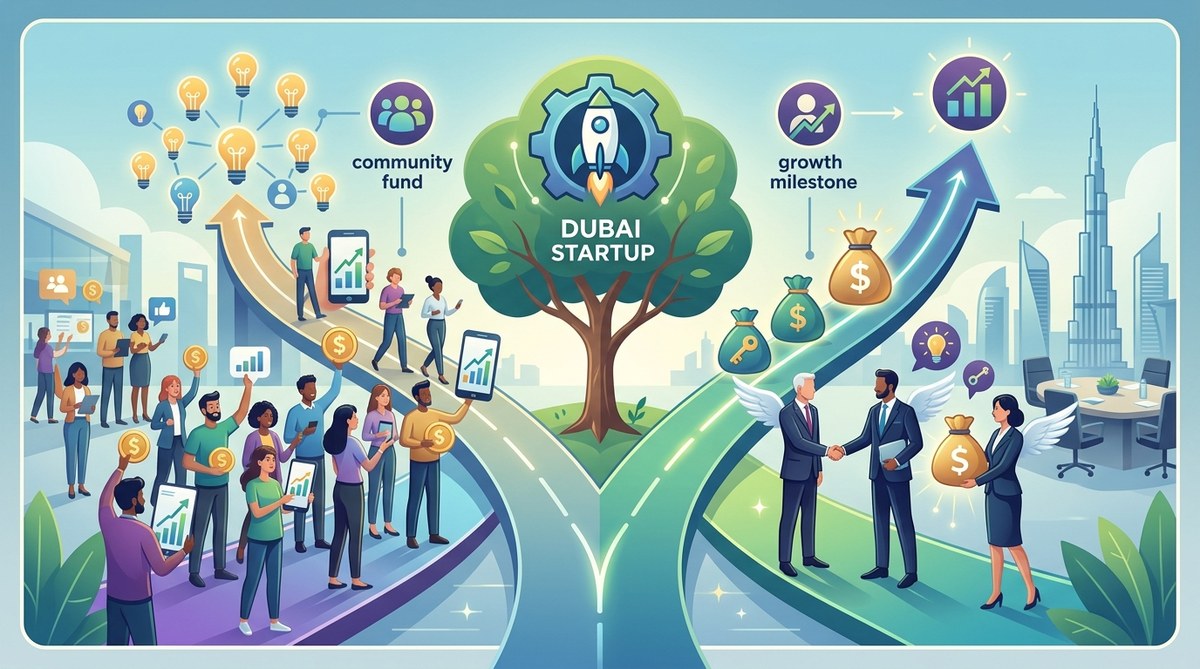
For a broader view of the funding landscape, see our comparison of crowdfunding vs. angel investors: which path fits your Dubai startup?
What This Means for Platform Managers and Researchers
If you manage a crowdfunding platform in Dubai, your job is to design for human nature.
- Surface social proof. Make backer counts and recent donations visible on every page. Do not hide them in a tab.
- Reduce friction. Allow guest checkout. Let users pledge without creating a full profile first.
- Enable sharing. Add one click buttons to share a pledge on WhatsApp and Telegram. These are the primary sharing tools in the UAE.
- Show local impact. If a campaign helps a Dubai based cause, highlight that. Use map pins or local landmarks in the campaign imagery.
For researchers, the Dubai market offers a unique case study. It is a high trust, high ambition environment where collectivism and individualism coexist. Studying backer behavior here can reveal patterns that are less visible in Western markets.
A Final Look at the Data
The numbers back up the psychology. Campaigns that include a video raise 4 times more than those without. Campaigns with 10 or more early backers are 3 times more likely to reach their goal. And campaigns that update their backers at least 5 times during the run raise 2.5 times more.
These are not just statistics. They are reflections of human behavior. Video builds trust. Early backers create social proof. Updates maintain the feeling of belonging.
When you understand the psychology of backer behavior crowdfunding, you stop guessing and start designing for success.
Putting It All Into Practice
The psychology behind donations is not abstract. It is practical. It is the difference between a campaign that feels like a sales pitch and one that feels like an invitation to join a community.
Next time you design a campaign, start with the backer. What do they need to feel safe? What do they need to feel proud? What do they need to feel connected?
Answer those questions, and the donations will follow. Start small. Test one change. Maybe it is adding a trust badge. Maybe it is rewriting your story to focus on the backer’s role. See what happens. Then iterate.
The best time to apply these insights is now. The second best time is before your next campaign goes live. Use what you have learned here, and watch your results change. Good luck.







Leave a Reply